Expert Engineering Reports for Comprehensive Seawall Inspections, Repairs, and Full Construction.

Why Annual Seawall Inspections Are Critical in 2025
As climate change accelerates and coastal infrastructure ages, annual seawall inspections in 2025 are no longer optional—they’re critical.
4/30/20254 min read
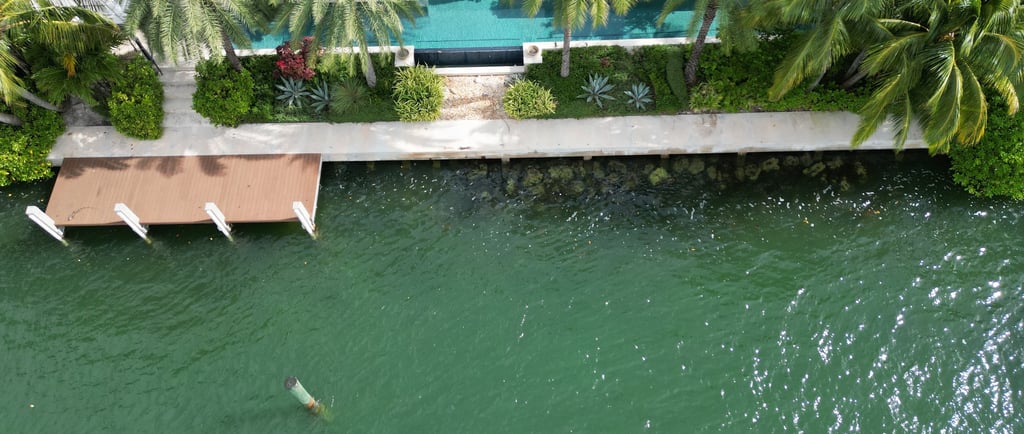
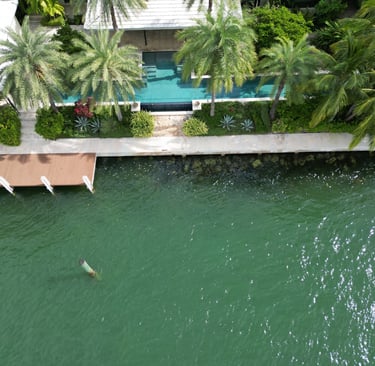
South Florida's waterfront properties are valuable, exposed, and aging all at once. The seawalls protecting them — most built 30 to 50 years ago — were designed for conditions that no longer exist. Rising sea levels, intensifying storm seasons, and stricter municipal ordinances have raised the stakes considerably. Annual seawall inspections are no longer optional maintenance. For canal-front and bayfront property owners throughout Miami-Dade and Broward County, they are the most cost-effective risk management tool available.
Three Reasons Inspections Matter More Than Ever
1. Aging infrastructure throughout South Florida
Most seawalls along South Florida canals and waterways were constructed using materials and engineering standards from the 1970s and 1980s. Saltwater exposure, tidal cycling, boat wake, and decades of hurricane seasons have been working on these structures ever since. Without routine professional assessment, small cracks and early-stage corrosion quietly develop into structural failures — often with no visible warning until significant damage has already occurred.
2. Rising sea levels and storm surge pressure
NOAA projects sea levels in South Florida could rise by up to 18 inches by 2040. Higher baseline water levels translate directly into increased hydrostatic pressure on seawall foundations and greater overtopping risk during storms. Seawalls that were adequate ten years ago may already be underperforming against current conditions — and the gap will widen. Annual inspections track whether your wall is keeping pace or falling behind.
3. Stricter local ordinances and compliance requirements
Municipalities across Broward and Miami-Dade — including Fort Lauderdale, Hollywood, and Miami Beach — have been tightening coastal construction and maintenance requirements. Insurance carriers and lenders are increasingly requiring documented inspection reports for waterfront properties, particularly those built before 1990. A current inspection report keeps you compliant, insurable, and protected during property transactions.
What a Professional Seawall Inspection Includes
A licensed inspection covers significantly more than a visual walkthrough. Here is what a complete assessment looks like:
Above-water visual assessment Inspection of the concrete cap, wall face, and panel joints for cracks, spalling, rust staining, exposed rebar, displacement, and leaning. For a detailed breakdown of what to look for between professional visits, see our seawall visual inspection guide.
Underwater inspection Certified divers assess the submerged sections of the wall — toe scouring, voids behind panels, marine growth, and footer condition. Damage below the waterline is the most common source of structural failure and the least visible from the surface. Learn more about our underwater seawall inspection services.
Structural evaluation and elevation checks Cap elevation is confirmed against NAVD88 benchmarks to determine whether the wall meets current city and flood compliance standards.
Signed and sealed engineering report Every inspection concludes with a written report including findings, photographs, repair recommendations with urgency levels, and cost estimates. Reports are signed and sealed for use in permitting, insurance, and real estate transactions in Miami-Dade and Broward County.
Who Needs Annual Seawall Inspections
Homeowners — If your property sits along a canal, bay, or intracoastal waterway, your seawall is your first line of flood and erosion defense. Annual inspections protect your foundation, your dock, and your property value.
Real estate agents — A current seawall inspection report included in a listing signals transparency and removes a major source of post-offer negotiation friction. Buyers and their lenders are increasingly asking for them. Read more on why real estate agents should prioritize seawall inspections.
Property managers — Annual inspections across a waterfront portfolio reduce liability exposure and support long-term capital planning with documented condition history.
Real estate investors — A seawall inspection before closing gives you a clear picture of deferred maintenance liability. A failing seawall on a 100-foot lot can mean $80,000–$110,000 in replacement costs that don't appear anywhere in a standard property inspection.
The Cost of Waiting
Minor seawall problems — a cracked cap, a compromised weep hole, early-stage soil washout — are almost always repairable for a few thousand dollars when caught early. The same problems left unaddressed for two or three seasons cross a threshold where seawall repair is no longer viable and full replacement becomes the only option, often exceeding $1,000 per linear foot.
The inspection cost is not the expense to worry about. The replacement cost is.
What to Expect During Your Inspection
Scheduling and pre-inspection walkthrough — A brief conversation about the property history, any known concerns, and access requirements.
On-site visual and structural evaluation — Full assessment of the seawall above water with photos and measurements.
Underwater assessment — Divers inspect submerged sections and footings where applicable.
Digital report delivery — A PDF report with findings, high-resolution images, and engineer recommendations, signed and sealed for permitting or insurance use.
Repair estimate if needed — If damage is identified, the report includes repair recommendations and estimated costs so you can make an informed decision.
Frequently Asked Questions
How often should I inspect my seawall in South Florida? Once per year at minimum, and after any named storm event regardless of visible damage. Subsurface erosion caused by storm surge is not visible from the surface.
Can I skip an inspection if I see no visible cracks? No. The most serious seawall damage — void formation behind panels, toe scour, anchor corrosion — occurs where you cannot see it. Visible cracks are often a lagging indicator, not an early warning sign.
How much does a seawall inspection cost in South Florida? Cost varies based on linear footage, site accessibility, and whether an underwater component is included. We provide specific quotes after a brief conversation about your property. Contact us for a free estimate.
What if I just purchased a waterfront property? Schedule an inspection immediately, even if the previous owner had one recently. You need baseline documentation under your name — for your insurance carrier, your lender, and your own records.
Do you serve areas outside Fort Lauderdale? Yes. We provide seawall inspection in Fort Lauderdale and throughout Miami-Dade and Broward County, including Hollywood, Pompano Beach, Hallandale Beach, Miami Beach, and South Miami.
Schedule Your Inspection Today
Annual inspections are the single most effective way to protect a waterfront property in South Florida. Don't wait for visible damage — by the time a seawall shows obvious signs of failure, the repair window has often already closed.
Licensed. Bonded. Insured. Serving Miami-Dade and Broward County.
© 2012-2024 Souffront Contractors & Engineers | All Rights Reserved
Estimates@souffrontcontractors.com
Phone: 877-420-7220
© 2024. All rights reserved.